
Why Generic ERP Systems Fail Aviation MRO Operations

Aviation MRO operations don’t run like typical businesses, but they’re often treated as if they do. At first glance, a generic ERP might seem like a practical choice. It handles finance, inventory, and basic workflows. But once it’s applied to aviation MRO environments, the gaps start to show – especially around compliance, traceability, and operational […]
Why Disconnected Work Orders and Labor Tracking Slow You Down and How Integration Improves TAT

In many operations, teams still count on separate tools for handling work orders and tracking labor. First, it may seem manageable. Over time, this gap still creates delays, confusion, and poor visibility. When systems do not talk to each other, it may be harder to control timelines, track progress, and manage costs. This directly impacts […]
Repair Order Management: Complete RFQ to Fulfillment Guide

Repairs start getting delayed long before the actual repair work becomes a problem, and actually, it begins with small things. A vendor quote is still waiting for approval, inventory records are outdated, someone from finance asks for missing documents, and another team is still trying to confirm repair status through email. None of it looks […]
Why Aviation Asset and Tool Tracking Is Critical

Aviation operations today are under increasing pressure. Fleets keep expanding, maintenance schedules get busier, and teams handle more work with limited resources. If a LOT (a single group of parts) moves untracked, the entire operation can stop completely. When operations experience downtime, they cost you thousands of dollars each hour. Utilizing smart aviation asset and […]
How Smart Work Order Management Boosts MRO Turnaround

In aviation, it is turnaround time (TAT) that ultimately determines the success or failure of an MRO. TAT counts the time from component receipt to return to service. The shorter the TAT, the less time an aircraft spends on the ground, thus making customers happy and increasing the flow of revenue. Most MRO teams run […]
How Aviation ERP Inventory Management Reduces AOG and TAT

In the aviation industry, time directly translates to financial impact. Aircraft on Ground (AOG) events cost operators thousands of dollars per hour. Parts traders are not able to make the sale if there’s a need for their parts. With repairs that are not moving, customers who are not happy and waiting longer than they expected, […]
How Aviation ERP Software Helps Eliminate Purchase Order Delays

For parts traders and MROs, aviation purchase order management avoids delays by integrating procurement and receiving into a single platform. Although aviation organizations often treat “Procurement” and “Receiving” as separate departments, they operate as a single control chain. The result is a deeper understanding of how procurement establishes vendor delivery-related expectations, certifications, timelines, and internal […]
A Practical Guide to Aviation Sales Order Management for Parts, Repairs, and Exchanges

‘Time is money’ is far from a cliché; it’s a reality check in the aviation industry. With an aircraft on the ground (AOG), the resulting pressure on the supply chain is enormous. At the center of it all is the aircraft parts sales management, the engine that drives the entire process in motion. Handling sales […]
Why Inventory Inaccuracy Breaks Aviation Operations and How ERP Fixes It
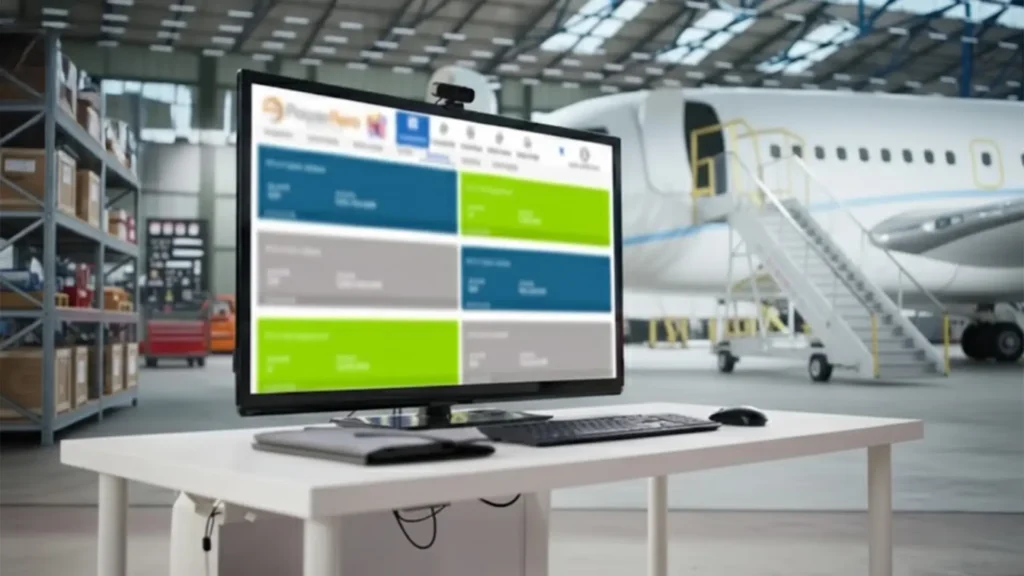
In aviation MROs and Parts trading operations, the inventory determines whether maintenance plans can be completed or fail. An aircraft’s parts and components data is an operational dependency that affects the aircraft’s availability, the integrity of its compliance, and its financial reliability across all aviation inventory operations. Mismatched inventory can halt entire aviation operations and […]
How Aviation ERP Software Improves Work Order Visibility from Quote to Completion

Work order visibility describes how each step of the repair or maintenance process can be tracked, from the quote through closure. This capability is critical for aviation operators to manage costs, comply with regulations, and avoid delays in aviation maintenance work order management. Most of the time, information is spread across multiple systems, so it […]